What to notice
One fixture or the whole house?
A slow bathroom sink, several sluggish drains, and a sudden drop in water pressure ask different questions. Record the fixtures involved before assuming the pipe you can see is the cause. A useful description is specific: the upstairs sink has weak hot flow, while its cold flow and the kitchen tap look normal. That detail helps a provider choose what to inspect. It does not replace a diagnosis.
Make room for an ordinary repair conversation
You do not need a technical vocabulary to call. Write down the first thing you noticed, the last time the fixture worked normally, and any recent repair or appliance change. Say whether water is still escaping and whether a valve stopped it. A photo taken from a dry, safe position can preserve the location of a drip or stain. Do not remove panels or open walls just to collect more evidence.
The house is a connected system
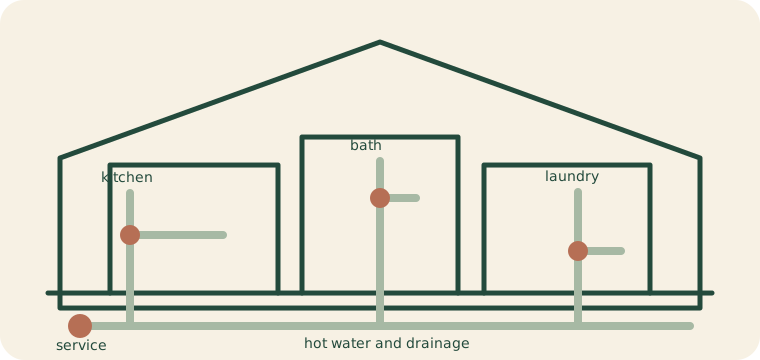
Water arrives through a service line, passes through controls and branches, and reaches fixtures and hot-water equipment. Used water leaves through drains. Pressure, supply flow, temperature, and drainage are different parts of that picture. Our room map helps you locate the parts without presenting a drawing as your actual plumbing layout. Keep a real shutoff and equipment record for your own property.
A plan for the next season
In a Massachusetts household, an outdoor faucet in autumn and a seldom-used basement drain in summer deserve different attention. A maintenance calendar is a reminder to observe, not a schedule for replacing parts that still work. Add the manufacturer’s requirements for your particular water heater, pump, and appliances. Give responsibility to someone who can notice a change before a small problem becomes an interruption.
Local questions belong with the right office
The Town of Westwood Building Division publishes plumbing permit and inspection information. Massachusetts provides an official license-search service for plumbers and gas fitters. Dedham-Westwood Water District publishes water-supply and service-line information. Those are three different responsibilities. A website about Westwood is not proof that a referred provider covers your address, holds the right license, or has obtained a permit.
Keep the scope visible
Before authorizing work, ask what the proposed repair includes and what it leaves out. Pipe repair, drying a wet cabinet, restoring drywall, replacing flooring, and resolving an appliance fault can involve different people. Ask how a hidden condition would change the price or require your approval. If work needs an inspection, establish who arranges it and what record you should receive.
Finish with a working record
A completed repair should leave you with an explanation of the cause, the work performed, and any remaining issue. Ask the provider to demonstrate normal fixture operation and explain maintenance. Keep the invoice, model information, warranty terms, and applicable permit or inspection records together. Recheck the repaired area during ordinary use without dismantling it. Report a new drip or changed performance promptly.
Know when observation should stop
A useful record never requires entering a flooded basement, standing under a sagging ceiling, handling wet electrical equipment, opening a pressurized appliance, or touching suspected wastewater. Step back and describe the boundary instead. If a leak involves an upstairs room, tell the provider which space lies below without cutting into its ceiling. If fuel odor, fire, structural instability, or immediate danger is present, leave the area and use the appropriate utility or public emergency channel. The referral number on this website is not a substitute for those services.
Bring recurring problems into one timeline
Three isolated invoices can hide a useful pattern. Keep dates for drain clearing, valve changes, pressure observations, appliance leaks, freeze events, and water-heater service in one property record. Note what was actually found, not what someone first guessed by phone. If the same symptom returns, give the next provider the prior scope and result. Recurrence does not automatically justify a larger repair, but it should prompt a conversation about what earlier work established, what it did not inspect, and why the proposed next step is different.
Make the first call a verification step
The receiving business should be able to give its name, explain whether it serves the address and issue, and state the terms for an assessment or visit. Ask who would perform the plumbing work and how that person’s Massachusetts license can be checked. Describe the symptom before accepting a repair label. If the recipient transfers the call, repeat the identity and terms questions with the new party. Write down the appointment details you actually agree to. A phone connection, even one reached from a Westwood page, is not proof of local coverage or a completed booking.